Namibia
Namibia lies in Southwestern Africa, with its many awesome contrasting landscapes. Its area is 825,418 square kilometres and is the second-least populated country in the world. Its population is a little over 2, 5 million and uses English as its official language. Namibia is flanked by two beautiful deserts, namely “The Namib desert”, along the Atlantic coastal line and “Kalahari Desert” in the eastern side. This unique country is a photographer’s paradise. Windhoek is the capital city and its 1,654 metres above the sea level. The currency used is Namibian Dollar. The South African Rand is also a legal tender, traded one on one with the local currency.
Namibia’s Main Attractions:
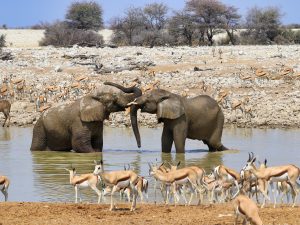
o Etosha National Park – Etosha is Namibia’s top wildlife destination, home to Africa’s tallest elephants, the endangered black rhino, and 91 other species of mammal. Etosha is especially popular with photographers in the dry season who flock to the waterholes (along with the wildlife).
o Skeleton Coast – Shipwrecks dot this wild coastline and elephants wander through the sand dunes that plunge directly into the freezing Atlantic Ocean. A desolate place that’s extremely rewarding for the adventurous traveller.
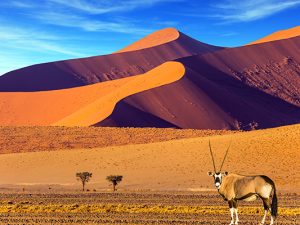
o Sossusvlei – is a salt pan and Deadvlei, surrounded by high beautiful red dunes, located in the southern part of the Namib Desert in the Namib-Naukluft National Park of Namibia.
o Fish River Canyon – one of the largest canyons in the world, thought to have formed about 500 million years ago. You can hike the canyon but only during the cooler months between May and September.
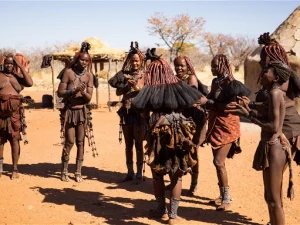
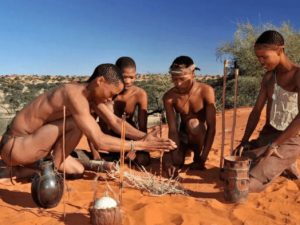
o Cultural Safaris – The San Bushmen of the Kalahari Desert and Tsumkwe area. Damara living museu in Damaraland. Himba villages visit in Kaokoland and Ovambo Cultural home at Ongula Village Homestead. There are many cultural living museums around the country where you can learn more about different tribe’s cultural practices.